Sea of Cortez Expeditions
Seven days on the Sea of Cortez, mapped to the BC curriculum, with pre-trip and post-trip work teachers can assess. Documentation ready for district submission.
Cohort field courses built with faculty. Students run transects, ethograms, and water quality sampling as a working research team, with nightly data analysis and a capstone output.
Small-group and family expeditions built around what you most want to see. Whale sharks, mobula rays, sea lions, whales, and island hikes, timed to the season and paced for all swimming abilities.
Details
Company: LSF Expeditions Ltd. (Little Shark Fin Expeditions)
Region: La Paz, Baja California Sur, Mexico, on the Sea of Cortez
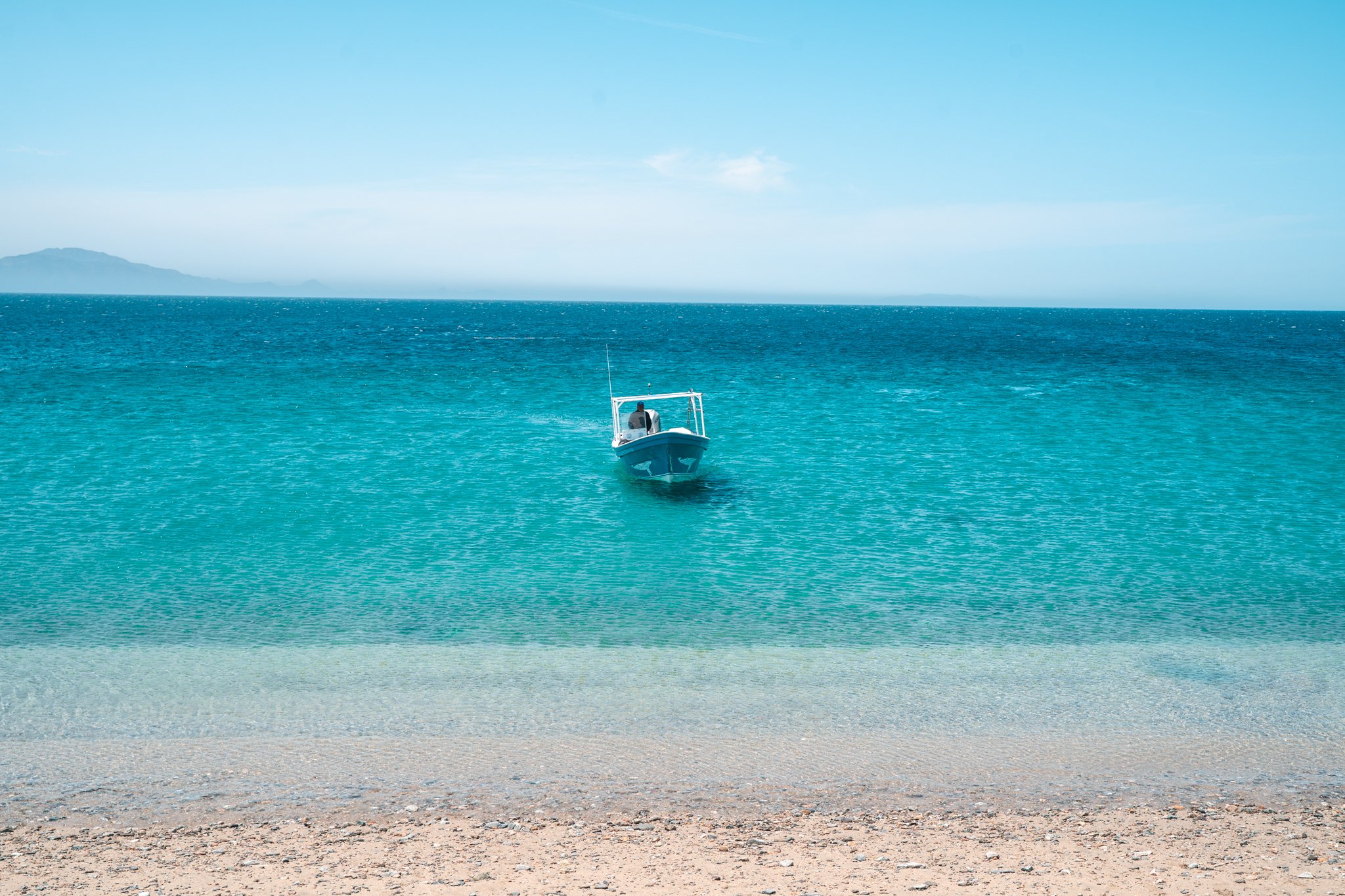
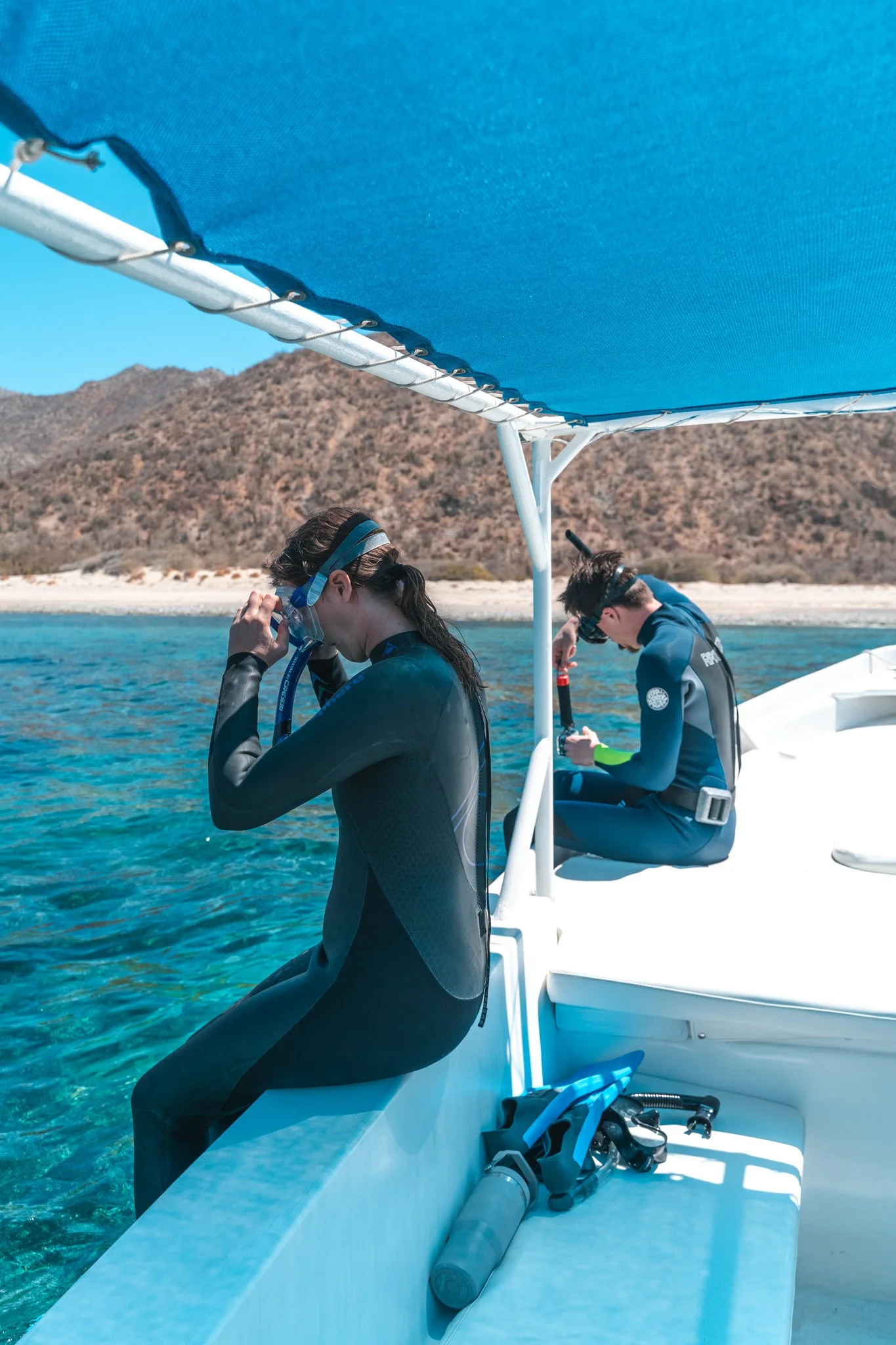
Boat operations: Baja Ocean Extreme, purpose-built pangas with local captains
Safety partner: GLC Aquatic Safety Department (ASD), a registered aquatic safety agency with lifeguard, emergency medical, and diving divisions, registered with the tourism authorities of Baja California Sur
Program structure: Seven days, Sunday to Saturday, with five full field days
Group and ratio: Up to 20 students, with a 1 to 6 staff-to-student ratio in the water
School Programs
For schools · Grades 9 to 12
Learning beyond the classroom.
Curriculum-connected marine biology expeditions your district can approve, built with teachers from first inquiry to post-trip assessment.
OVERVIEW
Curriculum connected expeditions
Take learning beyond the classroom with hands-on marine biology and conservation in the Sea of Cortez.
LSF partners with schools to deliver safe, curriculum-connected expeditions where students explore the ocean, build confidence, and do real science. We work alongside teachers and administrators to design programs that meet educational goals while keeping safety and accessibility first. From pre-trip preparation to post-trip resources, our team supports schools every step of the way.
PROGRAM AT A GLANCE
Seven days, Sunday to Saturday, with five full field days
Up to 20 students per expedition
1 to 6 staff-to-student ratio in the water
Scientist-led, with a dedicated safety lead on every departure
Two licensed pangas operated with Baja Ocean Extreme
Accommodation, departure point, and daily schedule confirmed with your booking
FIELD ACTIVITIES
This section is powered by the Field Activities explorer. Eight activities, each mapped to BC courses, big ideas, competencies, and assessment. In the classroom students simulate the work; on the expedition they do the real thing.
See how LSF maps to your curriculum
Pick a field activity, or the course you teach, and see exactly how each LSF activity connects to the BC science curriculum: the big ideas, the competencies, and how the classroom version becomes the real thing in the field.
BC CURRICULUM ALIGNMENT
Every activity aligns to Environmental Science 11, with additional connections across Science 9, Science 10, Life Sciences 11, Earth Science 11, Science for Citizens 11, Environmental Science 12, and Specialized Science 12.
The BC curriculum's own sample inquiry questions, from coral growth and water quality to fisheries and First Peoples marine practices, appear inside the explorer as "from your BC curriculum" callouts, so teachers see the direct link to what they already teach.
SAFETY
LSF is safety-first, with certified partners on every departure and full documentation for your district.
A dedicated safety lead and certified aquatic safety staff from the GLC Aquatic Safety Department on every departure
Low in-water ratios of 1 to 6, so students are closely supervised at all times
Purpose-built pangas with local captains through Baja Ocean Extreme, carrying full safety equipment and marine radio
A complete set of standard operating procedures and a risk management plan covering supervision, water safety, emergency response, and medical procedures
Emergency response, including the nearest medical facility and an evacuation plan, documented in the safety plan and reviewed with your group before departure
Aligned with BC science field-trip safety guidance, with full documentation shared for district or institutional review
WHAT TEACHERS AND SCHOOLS GET
A curriculum alignment chart mapped to BC courses
Pre-trip classroom materials and preparation
Post-trip resources and assessment support
Standard operating procedures and a risk management plan for district submission
Teacher guides for pre, during, and post learning
WHAT STUDENTS PRODUCE
Field notebooks, species logs, data reports, behavioural ethograms, biodiversity posters, and a capstone presentation, drawn from the activities above.
Bring your students to the Sea of Cortez.
Tell us about your group and goals. Our team will follow up with program options and everything you need to customize the expedition for your students.
University Programs
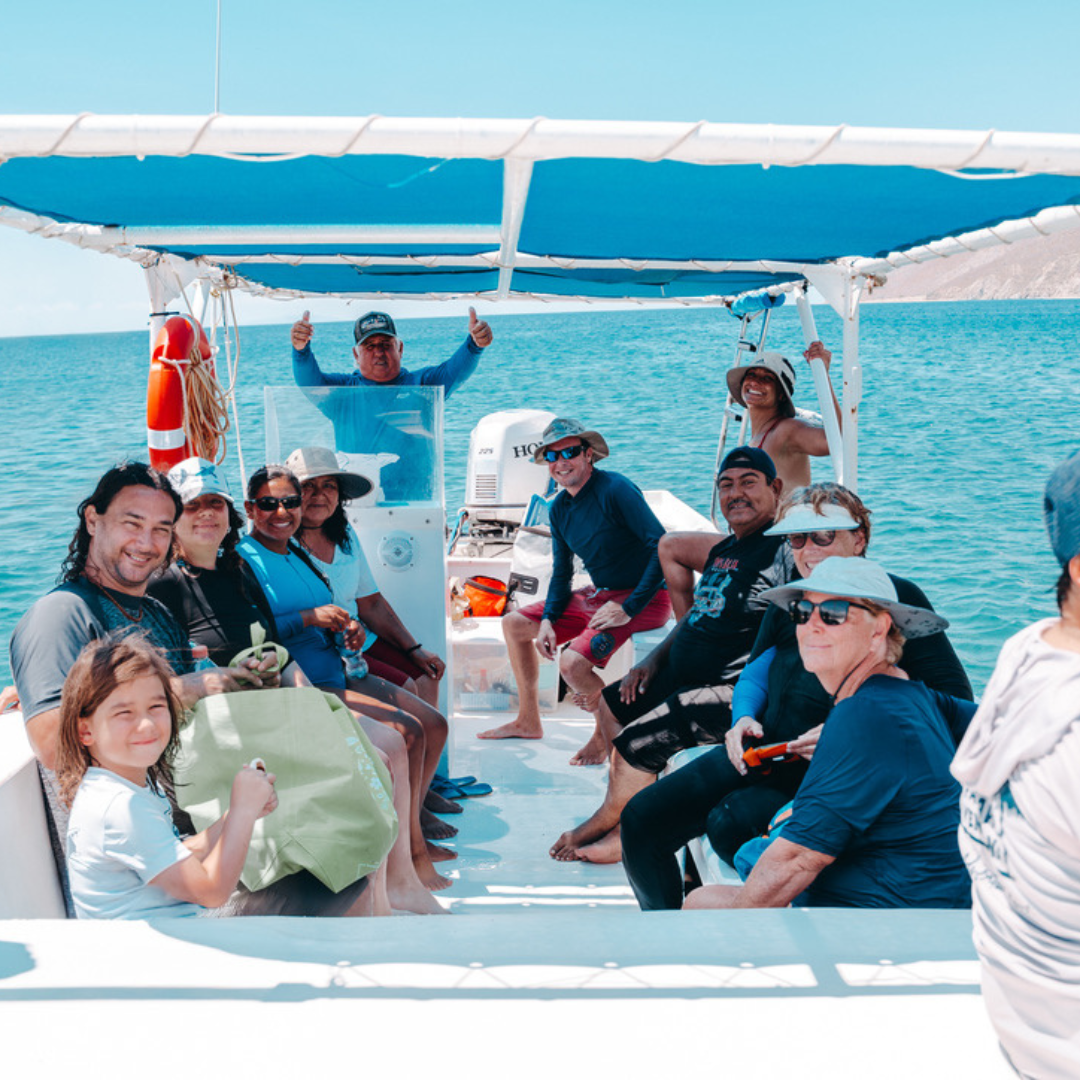
Direct field study in the Sea of Cortez.
Direct field study in the Sea of Cortez.
Cohort field courses built with faculty, where students run real marine research as a working team, not a tour.
OVERVIEW
Built around the research
A university expedition is structured like a field season.
Students collect and analyse real data alongside working scientists: reef transects, sea lion ethograms, plankton and water quality sampling, and whale shark photo identification. Each day ends with a data debrief, and the trip builds toward a capstone output. We design each course with faculty around your learning objectives, field methods, and assessment. Module outlines and syllabi are available on request.
WHAT A COHORT DOES
Field methods: Transects and quadrats, behavioural ethograms, plankton tows, and water quality sampling, run to a repeatable protocol.
Data and analysis: Students log observations daily and work them up in nightly data sessions, turning raw field notes into results.
Capstone output: The season builds toward a deliverable: a research poster, dataset, or presentation the cohort produces together.
FIELD METHODS IN DETAIL
Reef biodiversity transects: line-transect and quadrat sampling, species counts, biodiversity indices, and site comparison
Behavioural ethograms: focal and scan sampling of sea lions at a working colony
Plankton and water quality: net tows, microscopy, and salinity, pH, and temperature profiling
Whale shark photo identification, contributing to an active population study
Seabird and coastal observations tied to climate and food webs
Sustainable fisheries and conservation policy sessions with local experts
PROGRAM STRUCTURE
Seven days with five full field days, or a custom length arranged with your department
1 to 6 in-water ratio, scientist-led
Nightly data analysis building to a capstone deliverable
Cohort size and any academic credit arranged with your institution
Accommodation and departure details confirmed with your booking
SAFETY
The same safety framework as our school programs, with full documentation for your institution.
A dedicated safety lead and certified aquatic safety staff from the GLC Aquatic Safety Department on every departure
Low in-water ratios of 1 to 6, so students are closely supervised at all times
Purpose-built pangas with local captains through Baja Ocean Extreme, carrying full safety equipment and marine radio
A complete set of standard operating procedures and a risk management plan covering supervision, water safety, emergency response, and medical procedures
Emergency response, including the nearest medical facility and an evacuation plan, documented in the safety plan and reviewed with your group before departure
Aligned with BC science field-trip safety guidance, with full documentation shared for district or institutional review
WHAT FACULTY GET
A course designed around your objectives, methods, and assessment
Module outlines and syllabi on request
Full safety documentation for your institution
Build a field course with us.
Tell us your objectives and we will design the methods, schedule, and assessment around them, with full safety documentation for your institution.
Private Expeditions
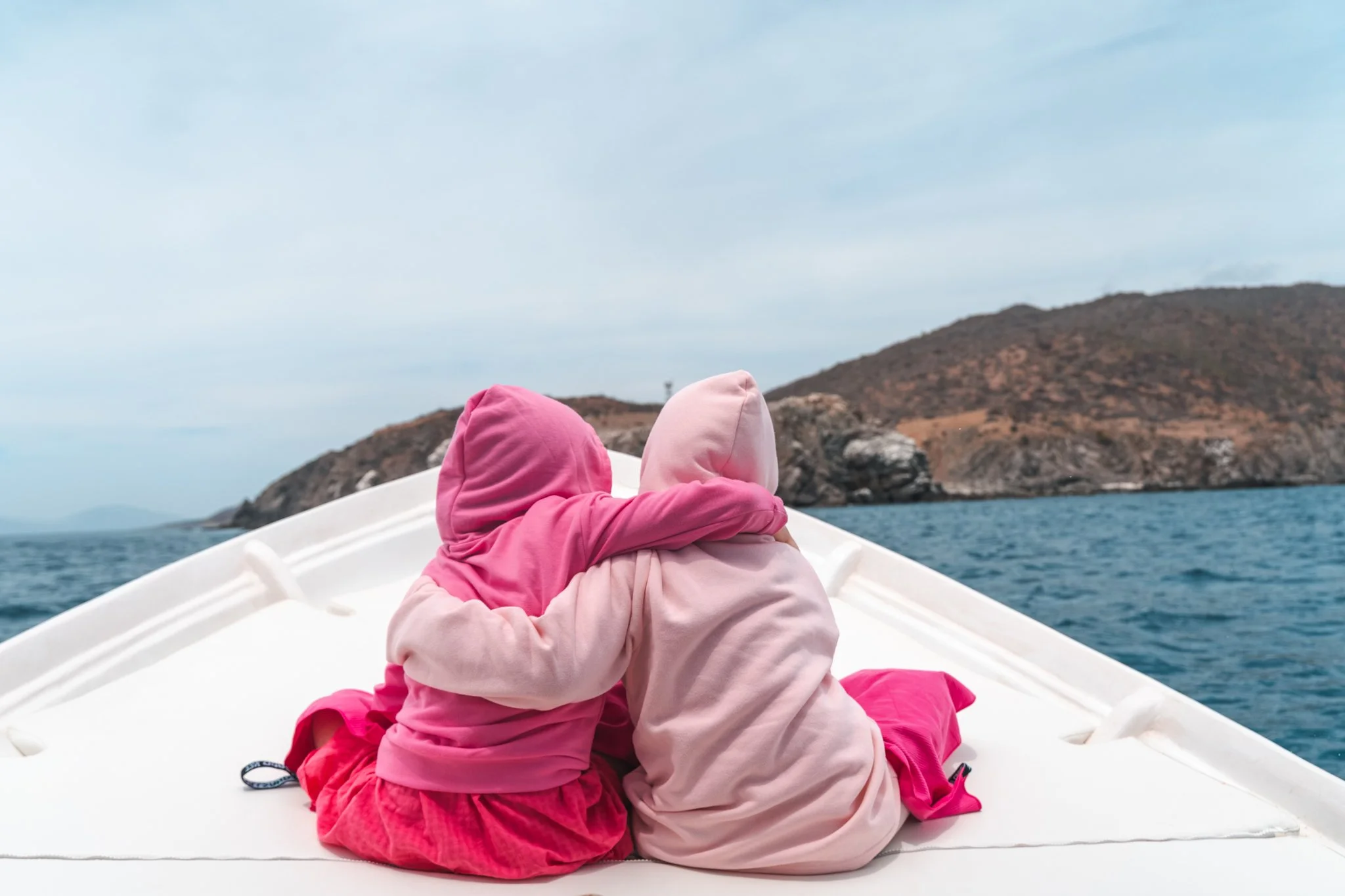
Your trip, built around the wildlife.
Private and family expeditions designed around the animals you most want to see, and timed to the season you can travel.
BUILT AROUND THE WILDLIFE
Tell us what you want to see. We build the itinerary around the season.
The Sea of Cortez changes through the year. Whale sharks gather in the bay through winter, mobula rays aggregate in their thousands in late spring, and sea lions are here year round. Use the calendar to find your window, and we will plan the rest. Small private groups, scientist-led, and paced for every swimming ability. Families, friends, and solo travellers all welcome.
HOW A PRIVATE EXPEDITION WORKS
Choose your dates and the wildlife on your list
We design the itinerary around the season and your group
Small private groups, all swimming abilities
Scientist-led and safety-forward, with certified safety staff and local captains
Accommodation and departure details confirmed with your booking
SAFETY
A dedicated safety lead and certified aquatic safety staff from the GLC Aquatic Safety Department on every departure
Low in-water ratios of 1 to 6, so students are closely supervised at all times
Purpose-built pangas with local captains through Baja Ocean Extreme, carrying full safety equipment and marine radio
FEATURED DEPARTURE
Dates: March 16 to 21, 2027
Length: Five days on the Sea of Cortez, based out of La Paz
Availability: Limited spots, offered to the community at an exclusive rate
Plan your private expedition.
Send us your dates and the wildlife on your list. We will come back with an itinerary and everything you need to book.
Marine life calendar
Time your private expedition to the wildlife you most want to see. Filter by group, then tap any month to see what is around and what is at its peak.
Seasons are guidance drawn from Sea of Cortez field experience and can shift year to year with water temperature and conditions. Los Islotes sea lion swimming has a seasonal closure during pupping. Grey whale viewing on the Pacific coast is a separate seasonal add-on. Confirm current conditions when you book.